CLA 800 mg: know what you’re choosing
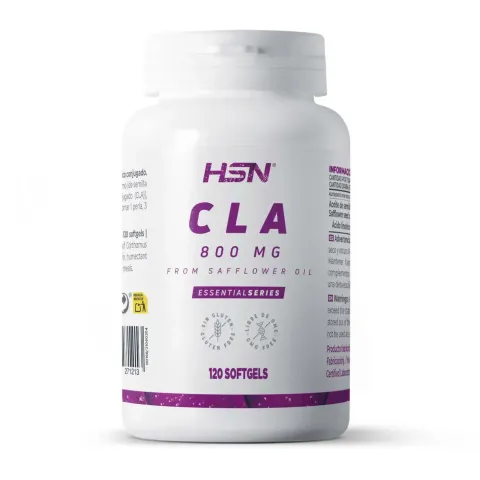
Choosing a food supplement starts long before you open the pack. It starts with where it comes from, the ingredients it contains and the details that help you understand what you’re buying. With our CLA 800 mg (conjugated linoleic acid) from EssentialSeries, we focus on three things: safflower seed oil, a defined concentration of conjugated linoleic acid and the convenience of a softgel format.
CLA stands for conjugated linoleic acid, a name that refers to a family of related fatty acids. It occurs naturally in food, mainly in dairy products and meat from ruminant animals such as cows and sheep. The amount found in these foods varies according to several factors, including what the animal eats.
Our food supplement lets you add a defined amount of CLA to your diet without depending on that variation between foods. To make it, we use a plant-based raw material: oil from safflower seeds. Its origin is part of what makes this product what it is, and it’s worth knowing about alongside its concentration and format.
From safflower to an oil with 80 % CLA
Safflower, known botanically as Carthamus tinctorius, is the plant whose seeds provide the oil we use. The linoleic acid in this oil is the starting point for obtaining CLA. So when we talk about its origin, we mean a seed-derived raw material prepared to achieve a specific composition.
This distinction helps explain the product: safflower oil is the starting material, while CLA is the ingredient we want to include. Our formula uses an oil standardised to 80 % conjugated linoleic acid. “Standardised” means the raw material is prepared to provide that defined concentration.
The percentage that matters: 80 % is the proportion of CLA in the oil used. It refers to the composition of the oil inside the softgel; the shell is part of the product’s format.
Knowing this percentage lets you look beyond the ingredient name. You can see where it comes from and how much CLA the selected oil actually contains. These details help you compare compositions more confidently and choose a formula based on what’s inside.
We also define its isomer blend. This term refers to different forms of the same molecule, with small differences in their structure. Our CLA combines the c9,t11 and t10,c12 forms in equal parts. The names may sound technical, but the idea is simple: as well as choosing the concentration, we specify which forms of CLA make up the blend.
Origin, percentage and isomer profile each tell you something different. Origin tells you where it comes from; percentage tells you the concentration in the oil; and the isomer profile tells you which forms of CLA are used. Together, they give you a clearer picture of the raw material we use to make our food supplement.
A simple formula in a softgel
Inside our CLA, you’ll find a short ingredient list: safflower oil concentrated in conjugated linoleic acid, gelatine and glycerine. The oil provides the CLA, the gelatine forms the shell and the glycerine is used as a humectant when making the softgel. Each ingredient has a specific role in the finished product.
For an oil-based ingredient, the format matters. Softgels contain the oil and can be taken whole, without adding it to a recipe or preparing a drink. Their neutral taste makes it easy to fit the product into a routine without changing the flavour of breakfast, shakes or meals.
Some days are calm, while others are a chain of work, training, errands and barely any time in between. In that context, a ready-to-take format is practical. Our CLA brings the ingredient and its shell together in a format you can take with water, following the directions on the pack.
That convenience may also shape your choice. You might enjoy making a shake but prefer softgels for other ingredients. Having different formats available lets you organise your diet in a way that suits your habits and preferences.
Make room for it in a routine that works for you
Our CLA is designed for adults interested in nutrition who want to add conjugated linoleic acid to their diet. It may suit people who check the composition of their food supplements, pay attention to where raw materials come from and look for convenient formats.
If you train regularly, you probably already have small habits that help you stay organised: packing your gym bag, laying out your clothes or setting aside time for meals. Taking a food supplement can become part of one of those everyday moments too. Linking it to a familiar part of the day makes it easier to remember without adding another decision to a busy schedule.
To add our CLA to your routine, follow the directions on the pack and find an approach that feels simple. Take the softgels whole with water. The format takes care of the preparation, so you can focus on keeping up your habits comfortably.
When choosing it, keep your dietary preferences in mind too. The starting oil is plant-based, while this version uses gelatine in the shell. If you follow a vegan diet, you’ll find the HSN alternative made with plant-based softgels in our FAQs.
What products can you pair with our CLA?
Your diet can include different ingredients for different purposes. If, as well as adding CLA, you’re looking for a way to add protein to breakfast or an afternoon snack, we have Evowhey protein, our whey protein powder. You can use it to make shakes, giving you another way to organise protein intake throughout the day.
If you want to add omega-3 fatty acids EPA and DHA, take a look at our Ultra omega-3 TG, made with fish oil. Although both products come in softgels and contain oil-based ingredients, their compositions are different: one provides CLA, while the other provides EPA and DHA.
The choice depends on what you want to add to your diet and which format you prefer for each ingredient. At HSN, we offer these options so you can learn about them, compare their compositions and build a routine around your preferences.
Frequently asked questions
Are linoleic acid and CLA the same thing?
They’re related compounds, but their structures differ. The linoleic acid in safflower oil is the starting material used to obtain conjugated linoleic acid. That’s why, when choosing a CLA product, it helps to know both which oil it comes from and the percentage of CLA it contains.
Is our CLA 800 mg suitable for vegans?
This version uses gelatine in the shell. For anyone following a vegan diet, we have Vegan CLA 800 mg, with a starch-based shell. This alternative is made without animal-derived ingredients and is suitable for vegan diets.
What’s the difference between the CLA percentage and the isomer blend?
They’re two details about the composition. 80 % indicates the proportion of CLA in the oil. The isomer blend tells you which forms of CLA are used: in this product, we combine c9,t11 and t10,c12 in equal parts. Each detail tells you something different about the raw material.
Do I need to open the softgels or add them to food?
The softgels are designed to be taken whole with water, following the directions on the pack. The oil stays inside, and the product has a neutral taste. This makes it easy to add to your routine without preparing mixtures or changing your usual recipes.
Choose our CLA for what’s inside
An oil with 80 % CLA and a defined isomer blend. Our CLA brings these details together in a practical format for anyone who wants to understand a food supplement before choosing it.
Discover a convenient way to add conjugated linoleic acid at HSN, with information about its origin, composition and format. Choosing starts with knowing.
References
- Kramer, J. K. G., et al. (2004). Analysis of conjugated linoleic acid and trans 18:1 isomers in synthetic and animal products. The American Journal of Clinical Nutrition, 79(6), 1137S–1145S.
- Dhiman, T. R., Anand, G. R., Satter, L. D., and Pariza, M. W. (1999). Conjugated Linoleic Acid Content of Milk from Cows Fed Different Diets. Journal of Dairy Science, 82(10), 2146–2156.