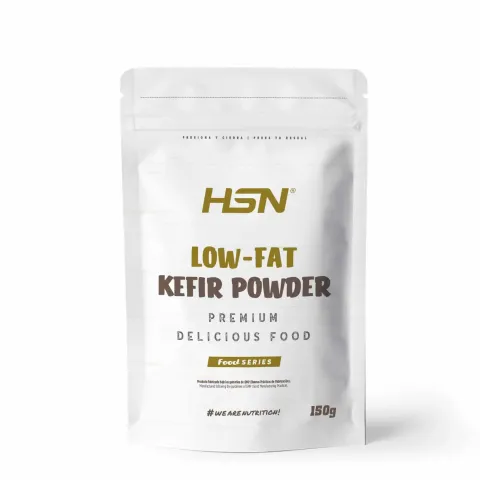
The classic kefir, now in a way more practical format
Low-fat kefir powder from FoodSeries is low-fat kefir powder.
A food made from fermented skimmed cow’s milk. It has low fat content, high protein, lactic ferments, no added sugars (contains naturally occurring sugars), gluten-free, and is suitable for vegetarian diets. Plus, it doesn’t need refrigeration, so you can store it comfortably in the pantry and have it ready to use whenever you want. If you like kefir but don’t want to rely on a refrigerated product that spoils quickly, this format makes it way easier: you store it, prepare it when you want, and use it however suits you best.
And that’s exactly what makes it so interesting. It keeps the idea of traditional kefir but adapts it to a more comfortable, flexible lifestyle that’s way easier to fit into your daily routine.
What is kefir and why is it so special?
Kefir is a fermented milk-based food. Its unique profile comes from the combined action of lactic acid bacteria and yeasts, which transform the milk and give it that slightly tangy, fresh, and so recognizable taste. That fermentation is exactly what makes kefir different from other more conventional dairy products.
Here at HSN, we’ve made it in a low-fat, powdered version, made exclusively from fermented skimmed milk with lactic ferments. The result is a super convenient option for those who want to enjoy a probiotic fermented food without having to rush to consume it after opening.
No need to overcomplicate things to see why it’s a top choice: it’s a super easy way to have kefir at home, with a longer-lasting format, easier to store, and way more versatile for different recipes.
How to prepare it and what texture to expect
Preparation is super simple: just reconstitute it following the instructions on the package and mix well until smooth. It’s a quick way to have your kefir ready on the spot, no home fermenting, no long waiting times, and no need to keep it cold before use.
One important detail to keep in mind: when prepared as directed, the reconstituted kefir is liquid. This isn’t a drawback but a product feature, and actually makes it really handy to drink as is or use in recipes where you want a more fluid mix.
Want it thicker?
If you want a thicker or creamier texture, a very useful option is to add xanthan gum. That way you can better adjust the consistency depending on how you’ll use it: lighter for drinking, or thicker for bowls, toppings, sauces, or desserts.
Practical perks of the powder format
Here’s one of its biggest strengths. Traditional refrigerated kefir is convenient if you’re going to consume it soon, but it also means you have to watch its storage and use it within a relatively short time, especially once opened. On the other hand, the powder format offers a longer best-before date and can be stored without refrigeration thanks to pasteurization and dehydration.
That translates into clear everyday advantages: it takes up less space, keeps better, is available whenever you feel like it, and you avoid the “gotta use it now” pressure. Plus, being powder makes it easier to measure how much you want to prepare or add directly to different recipes without relying on the traditional liquid format.
In a nutshell: the powder format gives you more freedom. More freedom to store it, more freedom to use it whenever you want, and more freedom to bring kefir into many more recipes in a practical way.
Usage ideas and recipes to enjoy it even more
One of the best things about this product is that it’s not just “prepare and drink.” Since it has a natural flavor and a mild acidity typical of kefir, it works great in both sweet and savory recipes. And because the reconstituted result is fluid, it’s even easier to add to everyday mixes.
- Breakfast smoothie: with banana, berries, and oats.
- Creamy bowl: with fruit, granola, and seeds; if you want it thicker, add a bit of xanthan gum.
- Overnight oats: to give a fresher, different twist to soaked oats.
- Yogurt-style sauce: with lemon, cucumber, garlic, and fresh herbs.
- Quick dessert base: with cocoa, cinnamon, coconut, or mashed fruit.
- Post-workout shake: combined with fruit or oats for an easy and tasty option.
It also works great in pancakes, cake mixes, cold creams, or even as a unique touch in homemade dressings. That’s the beauty of this format: it’s not limited to one use but accompanies you in many preparations.
Q&A - Don’t stay with doubts
How is it different from traditional refrigerated kefir?
Mainly in convenience. Here you have a product that doesn’t need refrigeration, lasts way longer in the pantry, and you can prepare it exactly when you need it.
Does it still have the typical kefir taste?
Yes. It keeps that fresh, slightly tangy, and very recognizable taste of cow’s milk kefir, and practically, even “in powder,” it’s 100% authentic kefir.
Is it a good option if I want to always have kefir available at home?
Yes, that’s one of its big advantages. Since it doesn’t depend on cold storage and keeps much better, it’s a very practical way to have kefir on hand without worrying about consuming it quickly.
Is it thick like yogurt?
No. Prepared as directed, it’s liquid. If you want a thicker texture, the best option is to add xanthan gum.
Is it only good to drink on its own?
Not at all. You can use it in shakes, bowls, desserts, sauces, cold recipes, and many other everyday preparations.
Why is the powder format so versatile?
Because it lets you store it better, dose it practically, and use it in recipes where traditional, already prepared and refrigerated kefir is less flexible.
References
- Ahmed, Z., Wang, Y., Ahmad, A., Khan, S. T., Nisa, M., Ahmad, H., & Afreen, A. (2013). Kefir and health: A contemporary perspective. Critical Reviews in Food Science and Nutrition, 53(5), 422-434.
- Apalowo, O. E., Adegoye, G. A., Mbogori, T., Kandiah, J., & Obuotor, T. M. (2024). Nutritional characteristics, health impact, and applications of kefir. Foods, 13(7), 1026.
- Arslan, S. (2015). A review: Chemical, microbiological and nutritional characteristics of kefir. CyTA - Journal of Food, 13(3), 340-345.
- Teijeiro, M., Pérez, P. F., De Antoni, G. L., & Golowczyc, M. A. (2018). Suitability of kefir powder production using spray drying. Food Research International, 112, 169-174.