A plant-based carotenoid, with a well-thought-out formula
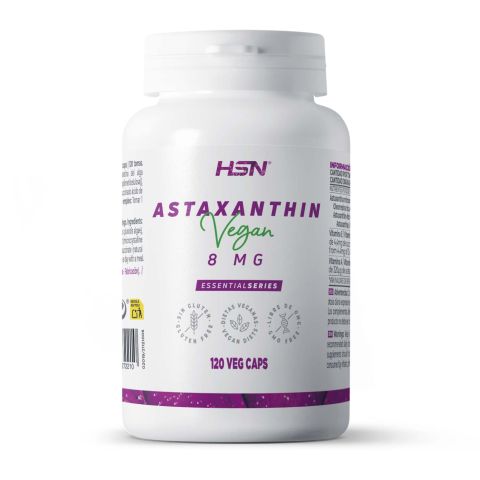
Astaxanthin 8mg from EssentialSeries is a dietary supplement made with astaxanthin and vitamins.
In vegetable capsules, it provides 8mg of astaxanthin per capsule, along with added vitamin E and vitamin A. The raw material comes from the alga Haematococcus pluvialis, a plant-based source known as the best source of astaxanthin as an alternative to crustaceans. It’s a formula designed for those looking for high-quality astaxanthin, plant origin, and a convenient format to include in any daily routine.
What makes this astaxanthin special?
Not all options on the market come from the same origin. Our astaxanthin doesn’t come from animal sources, but from Haematococcus pluvialis, a microalga known for its natural richness in this carotenoid. This allows us to offer a consistent option from start to finish, which is important in our view of product development, as it enables a formula suitable for vegan diets or simply for those who prefer a plant origin for the nutrients they seek.
A product for those who know what they want
Astaxanthin belongs to the xanthophyll family, a type of fat-soluble carotenoid found in nature. It’s usually a dietary supplement sought by people who pay close attention to their nutrition, who already use other carotenoids in their routine, or who look for clear, quality astaxanthins to add to supplement stacks aimed at overall wellness, in a simple and practical way.
If you’re looking for a plant-based astaxanthin option that’s convenient and high quality, try it at HSN
How to correctly interpret the astaxanthin table
It’s important to understand what each part of the supplement table means, since information and transparency are key pillars of how we work, and why we don’t just sell you an 'astaxanthin 8mg' without more details.
| Table data | What it means |
| Microencapsulated astaxanthin - 320mg | This is the total weight of the ingredient already microencapsulated: it includes the oleoresin (which contains astaxanthin) and the matrix that protects it and allows it to be handled as a powder. |
| Oleoresin rich in astaxanthin from the alga Haematococcus pluvialis - 32mg | This is the amount of plant oleoresin (raw material) present within that microencapsulated system. |
| Astaxanthin - 8mg | This is the actual amount of astaxanthin provided by each capsule. The nutrient content that matters in the product, contained in the microencapsulated oleoresin. |
The 320mg doesn’t mean there are 320mg of pure astaxanthin. It indicates the weight of the complete ingredient once transformed into a microencapsulated powder, ready to be encapsulated in a vegetable capsule.
Within those 320mg, there are 32mg of oleoresin rich in astaxanthin from the alga Haematococcus pluvialis. And within that oleoresin, the exact amount of astaxanthin is 8mg.
In short: complete microencapsulated ingredient → oleoresin → net astaxanthin.
First appears the total of the technological system, then the oleoresin fraction, and finally the exact amount of the carotenoid that matters to measure.
Microencapsulation: its importance in astaxanthin
Allows turning an oily fraction into a stable powder
The oleoresin rich in astaxanthin is naturally a fatty fraction. Working with it directly leads to pearl-type formats. Microencapsulation completely changes that approach: it turns the oleoresin into a powder ingredient, allowing it to be encapsulated in a vegetable capsule.
Helps preserve the integrity of delicate astaxanthin
For ingredients like astaxanthin, protection matters more than the dose. Microencapsulation creates a physical barrier around the oleoresin fraction and helps reduce its exposure to external factors like oxygen and light. This is especially useful for a delicate carotenoid like astaxanthin, where the formulation truly makes the difference in how the nutritional value of the compound is preserved.
In our formula, microencapsulation isn’t a minor detail. It’s what keeps astaxanthin in optimal condition throughout the product’s shelf life.
Vitamin E and vitamin A: the formula’s companions
Besides the 8mg of astaxanthin, each capsule includes vitamin E and vitamin A in significant amounts. This combination complements the nutritional properties of astaxanthin optimally.
What vitamin E provides
- Vitamin E contributes to protection of cells from oxidative damage.
What vitamin A provides
- Vitamin A contributes to maintenance of mucous membranes under normal conditions.
- Vitamin A contributes to maintenance of skin under normal conditions.
- Vitamin A contributes to maintenance of vision under normal conditions.
Who uses astaxanthin
People who prioritize quality formulas
Our astaxanthin is ideal for those looking for a plant-based alternative in a product type where vegan options aren’t always easy to find. It’s also interesting for those who prefer straightforward formulas, without complex blends and with a composition easy to integrate into their supplement routine.
Those who already use carotenoids
Astaxanthin is often part of routines that also include other carotenoids, especially for people who want to take extra care with their nutrition and micronutrient intake.
Due to its fat-soluble nature, it usually fits especially well alongside a main meal. This makes daily use easier and more practical.
An important curiosity: why the powder isn’t bright red
What you see isn’t 'pure' astaxanthin at first glance
Many people imagine astaxanthin as a very bright red. However, in a microencapsulated formula like this, what you see isn’t just the oleoresin rich in astaxanthin, but the entire ingredient protected inside a matrix. That matrix softens the tone and makes the color look more muted, with shades that can range from brick red, soft orange, to pinkish beige.
Small color variations are also normal
Since it’s a natural raw material, it’s normal for the visual appearance not to be exactly the same all the time. There can also be a slight tone change over time. In a product like ours, well formulated and properly stored, this isn’t a sign of a problem but a normal consequence, due to the natural behavior of the carotenoid in microencapsulated powder form.
The color not being bright red doesn’t take away from the value of astaxanthin: it’s precisely a result of how it’s been protected and adapted to preserve it so it can deliver all its properties properly.
Other HSN products to combine
People who use astaxanthin often are also interested in other carotenoids or formulas that fit into a broader wellness routine. Within the HSN catalog, these combinations are ideal:
Other carotenoids
- Lutein + Zeaxanthin 20mg/1mg: a very interesting option for those wanting to expand their routine with other plant-based carotenoids, also in microencapsulated format.
- Lycopene 15mg + Flaxseed Oil: a practical way to add another well-known carotenoid within a more complete strategy.
Other complementary compounds
- PQQ 20mg: a highly valuable compound to complement your supplement stack.
- NADH 50mg: with protection guarantees. Astaxanthin is an excellent complement to NADH use to enhance its nutritional properties.
Why choose HSN’s astaxanthin
For its origin and development
The origin of the alga Haematococcus pluvialis, the choice of a vegetable capsule, and the vegan approach of the formula make our astaxanthin an option suitable for all kinds of people, regardless of their dietary preferences.
For the protection
Microencapsulation isn’t just a label decoration. It transforms a delicate oleoresin into a powder that can be encapsulated and preserves the integrity of astaxanthin. And that, you can tell.
For the transparency
8mg of astaxanthin per capsule, added vitamins A and E, plant origin, and a practical presentation. No fuss and with the HSN guarantee that always means quality.
References
- Chen, L., Liu, X., Li, D., Chen, W., Zhang, K., & Chen, S. (2016). Preparation of stable microcapsules from disrupted cell of Haematococcus pluvialis by spray drying. International Journal of Food Science & Technology, 51(8), 1834-1843.
- Lin, S.-F., Chen, Y.-C., Chen, R.-N., Chen, L.-C., Ho, H.-O., Tsung, Y.-H., Sheu, M.-T., & Liu, D.-Z. (2016). Improving the stability of astaxanthin by microencapsulation in calcium alginate beads. PLOS ONE, 11(4), e0153685.
- Martínez-Álvarez, O., Ganuza, E., Sánchez-Tamés, P., & Casas, C. (2020). Recent advances in astaxanthin micro/nanoencapsulation to improve its stability and functionality as a food ingredient. Marine Drugs, 18(8), 406.
- Shah, M. M. R., Liang, Y., Cheng, J. J., & Daroch, M. (2016). Astaxanthin-producing green microalga Haematococcus pluvialis: From single cell to high value commercial products. Frontiers in Plant Science, 7, 531.